Azure Migration: A Practical Guide for Mid-Sized Organizations
Mid-sized organizations face a unique tension when considering cloud migration. They have enough complexity to make the move genuinely difficult -- legacy systems, compliance requirements, small-but-critical integrations -- yet they rarely have the dedicated platform engineering teams that large enterprises take for granted. The result is that many 50-to-1000-employee organizations either delay migration indefinitely or attempt a risky all-at-once approach that stalls halfway through.
Neither outcome is inevitable. A well-sequenced migration proves value early, minimizes disruption, and builds organizational confidence with each phase.
Start with the assessment, not the architecture
The biggest mistake is jumping straight to architecture diagrams before understanding what you actually have. A proper assessment covers:
- Application inventory -- every workload, its dependencies, data flows, and the team that owns it.
- Readiness scoring -- which workloads are lift-and-shift candidates, which need re-architecture, and which should stay on-premises.
- Compliance mapping -- regulatory constraints that affect data residency, encryption requirements, and audit trails.
- Cost modeling -- realistic Azure consumption estimates compared to current on-premises costs, including the hidden costs of self-managed infrastructure.
This assessment typically takes two to four weeks for a mid-sized organization and saves months of rework later.
The migration sequence that works
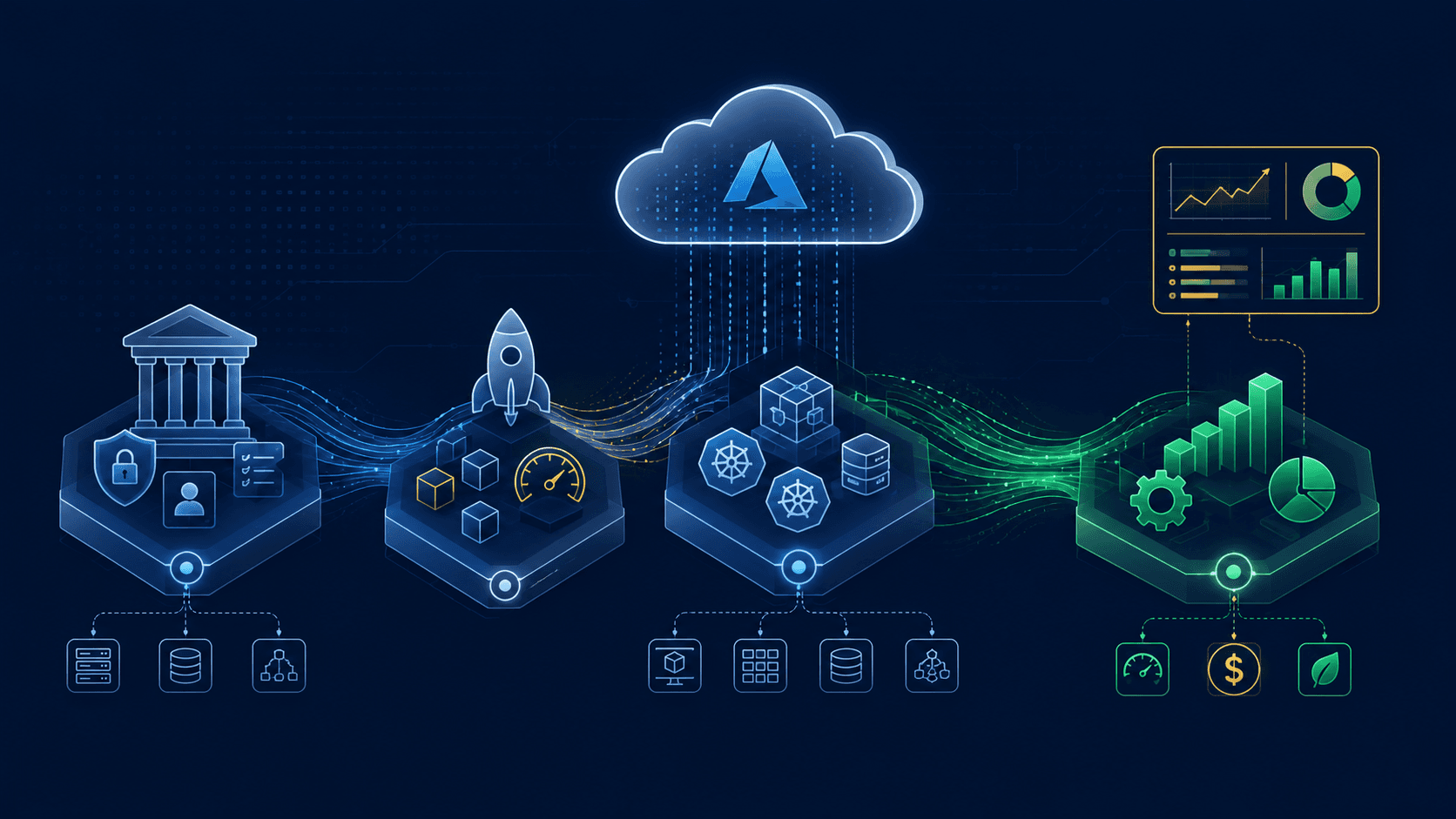
After 24 years of enterprise projects, I have found that the most reliable migration sequence follows a specific pattern:
Phase 1: Foundation (Weeks 1-4)
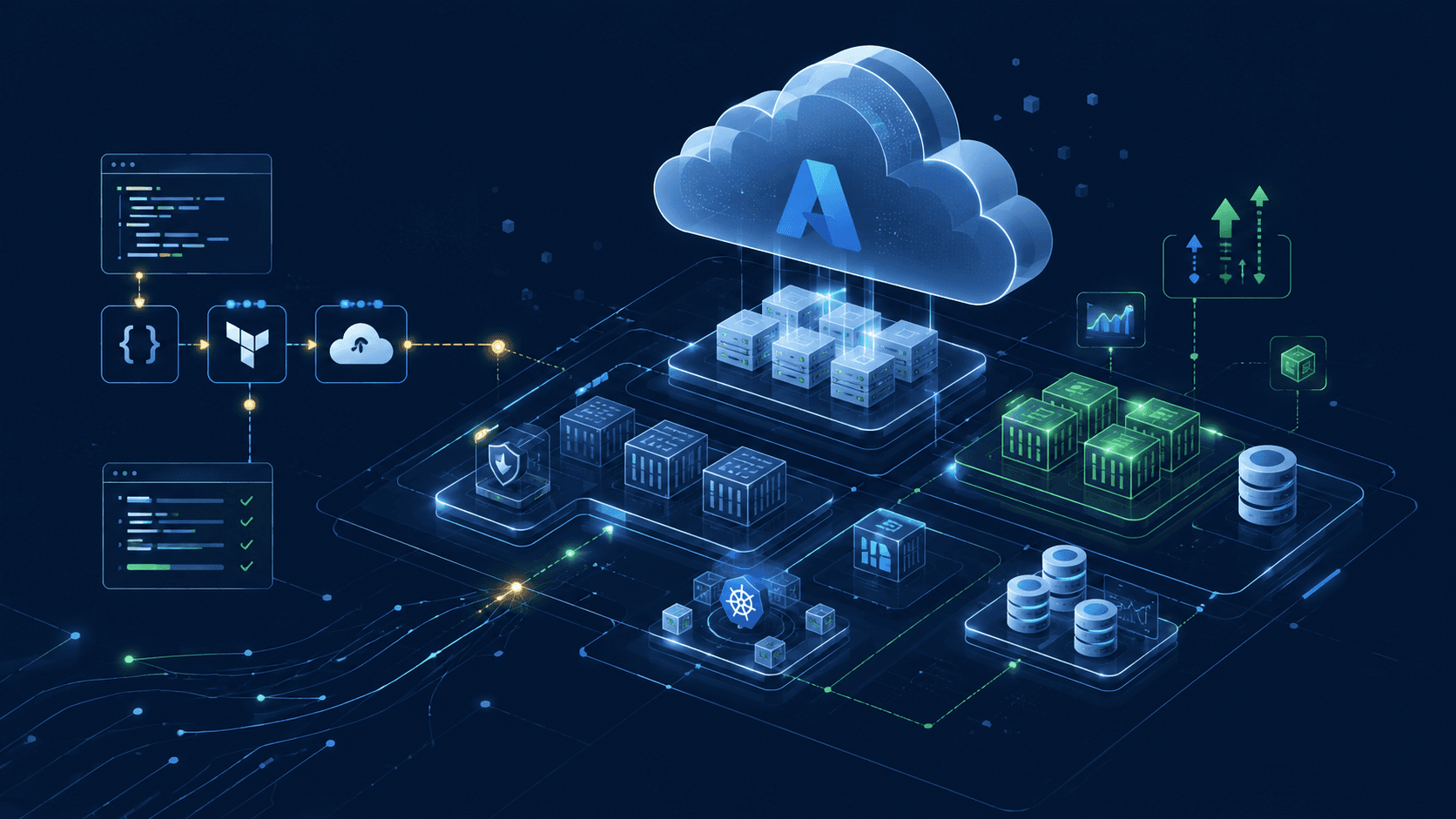
Stand up the Azure landing zone -- networking, identity (Entra ID), governance policies, and cost management guardrails. This is infrastructure-as-code from day one using Terraform or Bicep. No manual portal clicking.
# landing-zone/main.tf
module "core_network" {
  source              = "./modules/hub-spoke"
  hub_address_space   = ["10.0.0.0/16"]
  spoke_address_space = ["10.1.0.0/16", "10.2.0.0/16"]
  dns_servers         = ["10.0.1.4", "168.63.129.16"]
}

module "governance" {
  source = "./modules/policy-assignments"
  allowed_regions     = ["canadacentral", "canadaeast"]
  require_encryption  = true
  budget_monthly_usd  = 5000
  alert_threshold_pct = 80
}
The landing zone is your foundation. Getting it right means every subsequent workload inherits consistent security, networking, and cost controls automatically.
Phase 2: Quick wins (Weeks 3-8)
Migrate two or three low-risk, high-visibility workloads. File shares to Azure Files, email to Exchange Online, or a departmental web app to Azure App Service. These moves are technically simple but politically important -- they demonstrate that the cloud works, that the team can execute, and that users barely notice the transition.
Phase 3: Core workloads (Weeks 6-16)
Move the workloads that matter most: databases to Azure SQL or PostgreSQL Flexible Server, line-of-business applications to App Service or containers, and identity to Entra ID. This phase demands careful sequencing to avoid downtime and requires solid rollback plans for each cutover.
Phase 4: Optimization (Ongoing)
Once workloads are running in Azure, right-size the infrastructure, enable auto-scaling, and implement reserved instances for predictable workloads. Most organizations find 20-30% cost savings in this phase compared to their initial Azure spend.
The cost conversation
Cloud migration rarely saves money on day one. Anyone who tells you otherwise is either selling something or measuring wrong. The real financial case is:
- Avoided capital expenditure -- no more hardware refresh cycles every 3-5 years.
- Elastic capacity -- pay for what you use during quiet periods, scale up during peaks.
- Operational efficiency -- managed services eliminate patching, backups, and hardware maintenance.
- Speed to value -- new environments spin up in minutes instead of weeks of procurement.
The total cost of ownership (TCO) typically breaks even within 12-18 months and tilts decisively in favor of cloud by year three -- but only if you actively manage costs from the start.
Governance from day one
Cost overruns are the number one reason mid-sized organizations lose confidence in their cloud strategy. Prevent them with:
- Azure Cost Management budgets with automated alerts at 50%, 75%, and 90% thresholds.
- Resource tagging policies enforced via Azure Policy -- every resource tagged with cost center, environment, and owner.
- Monthly cost reviews with stakeholders, comparing actual spend to forecasts.
- Automated shutdown of non-production environments outside business hours.
These are not nice-to-haves. They are survival mechanisms for organizations without dedicated FinOps teams.
Common pitfalls
Having guided dozens of migrations across education, healthcare, and government sectors, I see the same mistakes repeatedly:
- Skipping the landing zone -- migrating workloads into a flat, ungoverned subscription creates a mess that takes months to untangle.
- Big-bang cutover -- trying to move everything at once maximizes risk and guarantees a late-night war room.
- Ignoring hybrid reality -- most mid-sized organizations will run hybrid for years. Plan for it instead of pretending everything will be in the cloud by Q4.
- Underinvesting in identity -- Entra ID is the backbone of cloud security. Cutting corners here compromises everything built on top.
The pragmatic path forward
Cloud migration is not a technology project -- it is an organizational capability you build over time. Start with a solid assessment, sequence for early wins, govern costs from day one, and accept that hybrid is a feature, not a failure.
The organizations that succeed treat migration as a practice, not a one-time event. Each phase teaches the team something new, each workload migrated builds confidence, and the cumulative effect is an organization that can move faster, scale smarter, and spend less on keeping the lights on.

Founder & Principal Consultant at VerionSys. 24+ years delivering enterprise systems across AI, cloud, and integration in Brazil, Canada, and the USA.
Connect on LinkedIn